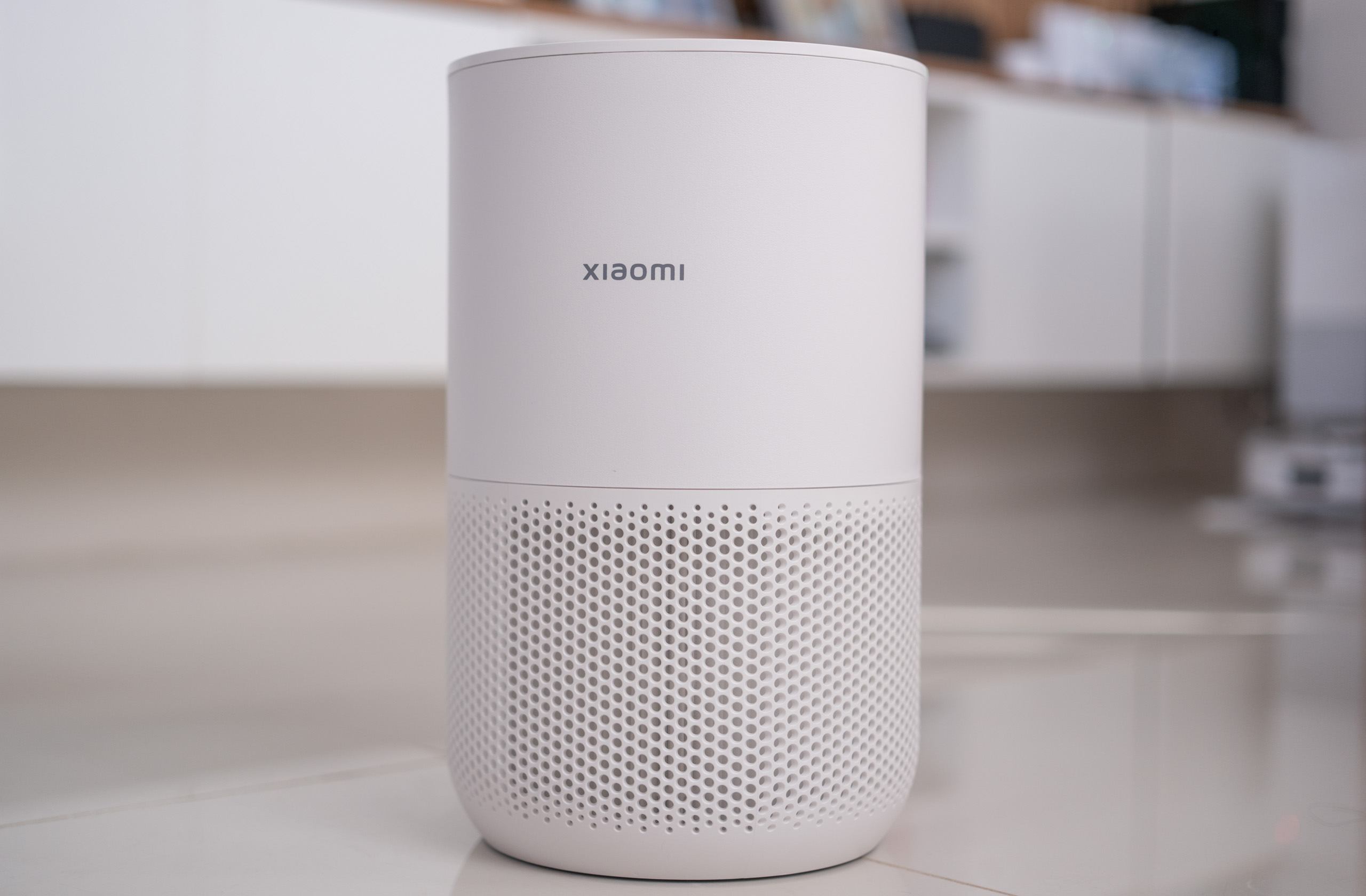
EDIT: I live in Southeast Asia where the Xiaomi air purifiers generally seem to be much cheaper than in North America and Europe.
After settling down after a few years of being a digital nomad, my wife and I quickly realised that we needed to do something about our indoor air quality. As you can see from this screenshot (from my outdoor air quality monitor), the air quality outdoors generally isn’t too bad, but it does often rise to 30-40ug/m3 of PM2.5 in the evenings. Unfortunately, as much as we try to seal the house, some of this air pollution always manages to get inside.

After looking around for air purifiers, I decided to try out a couple of devices from Xiaomi. This was largely for a few reasons:
- They have Alexa and Google Home integration (I am currently using Alexa)
- They are relatively affordable
- They generally have good reviews (at least for the larger models) from websites that I trust
While it wasn’t the deciding factor, they’re also very readily available here (in the Philippines, but also in SEA overall) which made them hard to ignore.
Now, one of the biggest challenges with Xiaomi air purifiers is simply understanding the product lineup. When I first went to the store a month ago, they had four devices - the Xiaomi Air Purifier 4 Compact, 4 Lite, 4 and 4 Pro. You can see how these devices compare in the image below (except here they are called the ‘Mi’ air purifiers - branding seems to depend on the market):

The devices weren’t actually in stock at the time, so I went ahead and bought a 4 Lite online for the purpose of testing before fully committing to Xiaomi purifiers. As it happened, I went back to the store last week and they had a new device - the Mijia Smart Air Purifier 6. Now, the branding is frankly confusing, but I believe this to be the update to the Mi Air Purifier 4. However, I was slightly confused because the sales rep showed me a graph like the one above, but also including the Mijia Smart Air Purifier 6, making it look like the new device is designed to stand alongside the four shown above. Anyway, I ended up picking up the Mijia Smart Air Purifier 6 for the living room, deciding that the 4 Lite would become our bedroom air purifier.

I’ve since received the Mi Air Purifier 4 Lite and I’ve been using these two devices for the best part of a week now. While I will be releasing a full review (and sharing more thoughts here as I experiment), I’ve so far been very impressed and I wanted to share my initial thoughts.
While the 4 Lite and Mijia Smart Air Purifier 6 look quite similar - and I appreciate that they follow a similar design language - they are quite different devices. Here are some of the key differences of the Smart Air Purifier 6 vs the 4 Lite:
- Price (around 180 USD vs 100 USD)
- CADR of 420 m³/h vs 360m³/h
- PM1, PM2.5 and PM10 readings vs only PM2.5
- UVC and negative ion functionality on the Smart Air Purifier 6
A couple of these ‘advantages’ are debatable (for example, I will always have the ionising feature disabled), but the Mijia Smart Air Purifier 6 does offer slightly better performance across the board and it does feel (and look) much more premium - albeit at a more premium price point.
The house we’re living in is around 100sq/m and is a three bedroom, two bathroom house with a combined living area and kitchen. In this area, the ceiling is very high - at the centre, around 4 metres. This means the purifiers have their work cut out for them, and I was considering adding a third device. However, based on the performance of these two (with the 4 Lite in the master bedroom and the Smart Air Purifier 6 in the living area), I’m not too sure if that’s needed anymore.
While I will be sharing more data in my full review, leaving these devices on automatic mode and manually adjusting the speed during periods of high pollution (such as when cooking) has led to our home something that it has never had before - 0ug/m3 of PM2.5 across all three of the rooms that I am monitoring.

Above is a screenshot showing data from my living room and office air quality monitors. Interestingly, the office doesn’t even currently have an air purifier in it (but it is adjacent to the master bedroom which houses the 4 Lite). In the Living Room sits the Smart Air Purifier 6, but it is a very large area and the air purifier is about 5 metres away from the air quality monitor so I am not surprised to see there are still some particles in the air.

While I have a lot more testing to do, I’ve been very pleasantly surprised by how well the Xiaomi air purifiers perform so far - especially considering the price and how feature-rich they are. I have found the Alexa integration to be less than ideal, and I’m not the biggest fan of the Mi Home app, but these feel like minor gripes in the scheme of things.
I also can’t speak on the longevity of the devices which is one worry I have after reading this thread. That said, I have a friend who’s been using a Xiaomi air purifier since 2018 and he said the filters are still available and it performs very well in his apartment, so it seems like experiences here are mixed.
If you have any questions while I work on my full review, please feel free to ask them here! I’ll do my best to answer everything I can.

 Also, out of curiosity, how much are official filters there?